

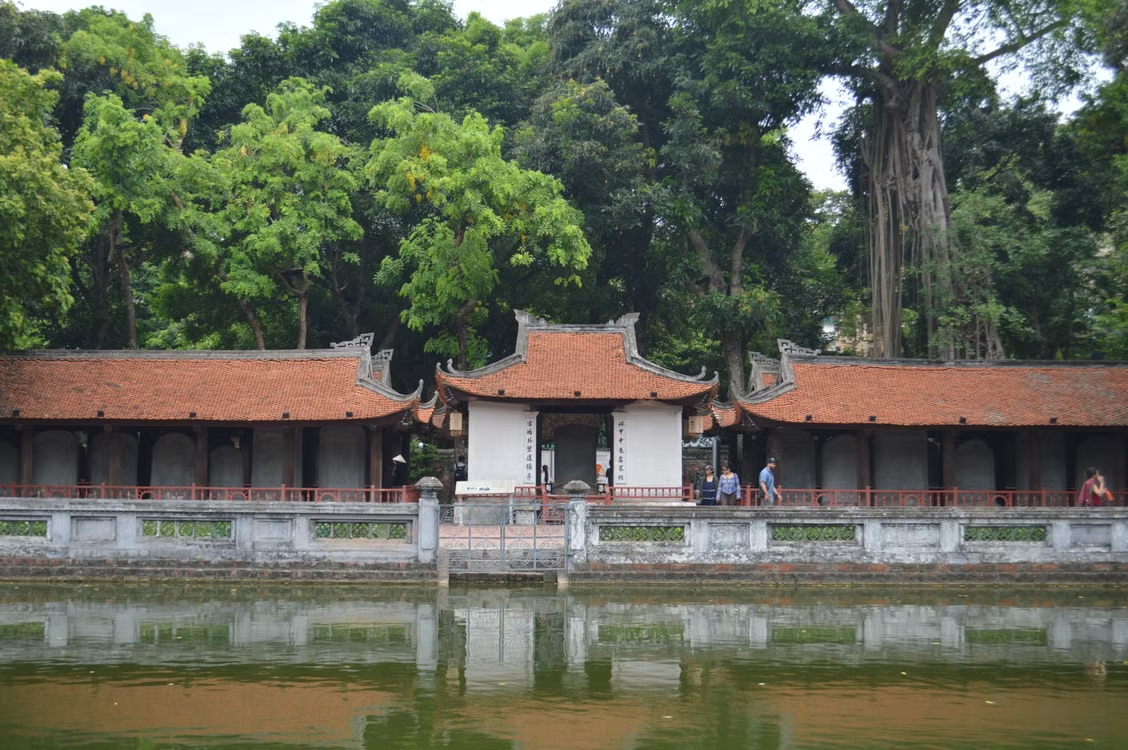
The Temple of Literature in Hanoi: the preserved harmony of stone, wood and knowledge
- Recommended months
- March – april and september – november Spring · Autumn
Why try it?
Founded in 1070, the Temple of Literature (Văn Miếu – Quốc Tử Giám) is one of the most visited historic complexes in Hanoi. Located in Đống Đa district, about 2.5 kilometres west of Hoàn Kiếm Lake, this 54,000-square-metre site was home to Vietnam’s first university. For domestic and international travellers alike, a visit offers direct immersion in the imperial architecture of the Lý and Trần dynasties and in the historic Confucian education system.
Access guide and essential practical information
The monument is bounded by four major streets: Quốc Tử Giám, Văn Miếu, Tôn Đức Thắng and Nguyễn Thái Học. The main visitor entrance is on Quốc Tử Giám street.
-
Transport and access: From the Old Quarter, the site can be reached in 10 minutes by taxi or motorbike taxi via Nguyễn Thái Học. City bus routes 02, 23, 32, 38 and 41 stop right next to the complex. For those using the Hop-on Hop-off double-decker sightseeing bus, the temple is a fixed stop on the route.
-
Opening hours: The site is open to the public every day of the week. Hours generally run from 8:00 am to 5:00 pm in winter, and from 7:30 am in summer. The ticket office closes 30 minutes before the site closes.
-
Length of visit: Allow between 1 hr 30 min and 2 hours to explore all five inner courtyards and the exhibition areas without rushing.
-
Rules and dress code: As this is a highly historic and spiritual place, appropriate dress is required at the entrance. Short shorts, skirts above the knee and sleeveless tops are not allowed. Hats and caps must be removed inside the places of worship.
Step-by-step visit and major points of interest
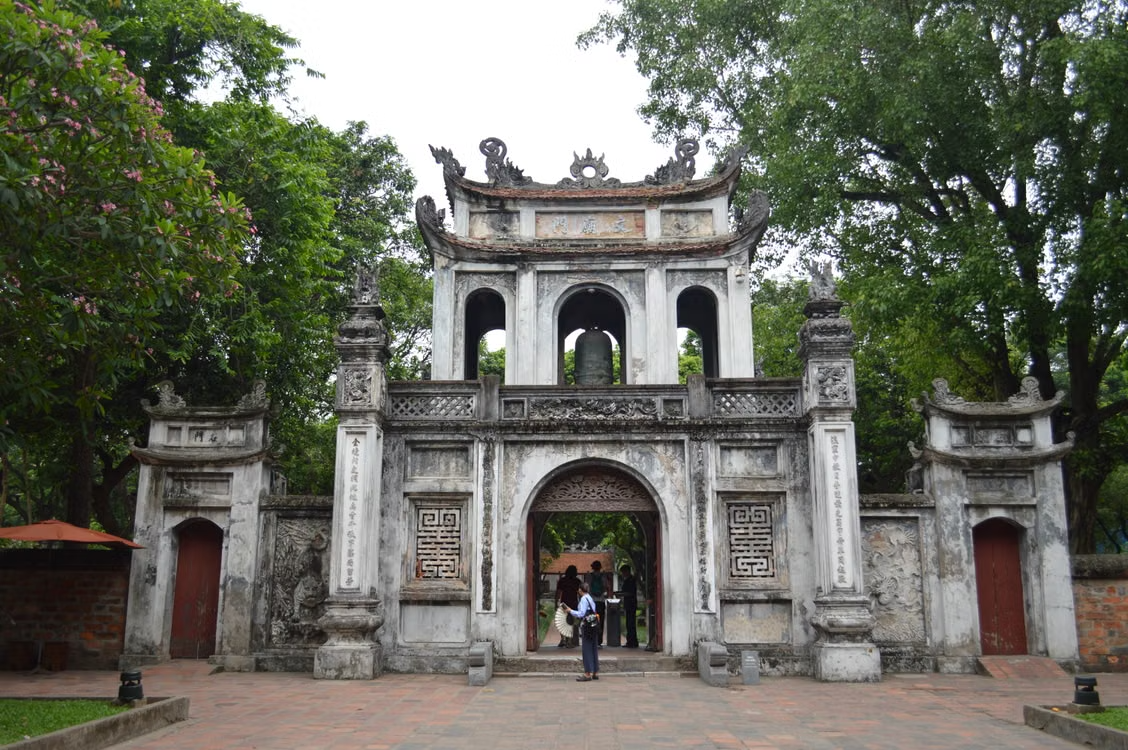
Entrance to the Temple of Literature. Photo: Valeria
The complex is laid out along a straight central axis running through five successive inner courtyards, separated by brick walls and monumental gates. The route is designed for a smooth progression from the main entrance to the former imperial academy at the far end of the site.
First and second courtyards: landscaped spaces of introduction and sound insulation
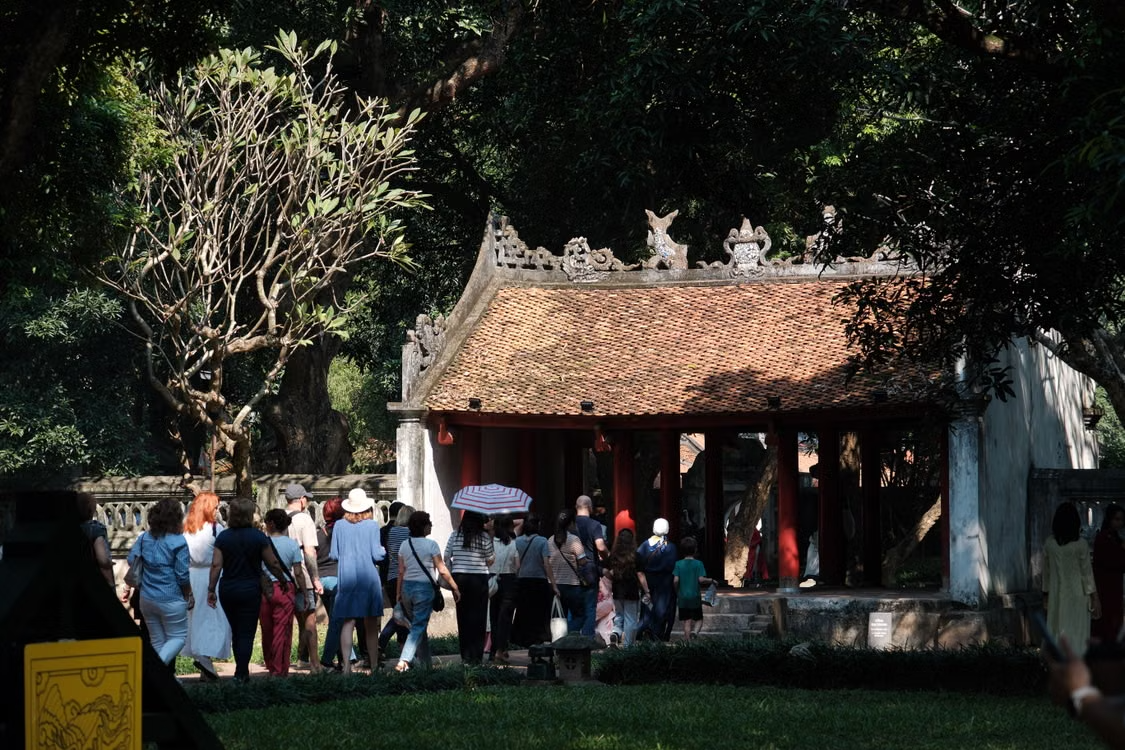
The Great Middle Gate. Photo: Tai Trung Do
After passing through the great outer entrance gate (Văn Miếu Môn), topped by a two-storey structure and reliefs depicting dragons and phoenixes, visitors enter a first green area known as the courtyard of the Great Middle (Nhập Đạo Vụ).
-
The first courtyard: This tree-lined space, with two small side ponds covered in water lilies, serves as a zone of thermal and acoustic transition from the hum of the street. The two wide brick paths are shaded by century-old trees, notably mango and banyan trees.
-
The second courtyard: The next section is reached through the Đại Trung Môn gate (the Great Middle Gate). This second courtyard, called Thành Đạt Vụ, is characterised by straight lawns and perfect symmetry. It contains two secondary side pavilions where students used to prepare before ceremonies. This area offers an open setting from which to observe the linear perspective of the site before reaching the wooden buildings.
Third courtyard: the Khuê Văn Các pavilion and the Doctors’ stelae
This area is the historic and heritage heart of the complex. It is here that the site’s greatest archival value is concentrated.
-
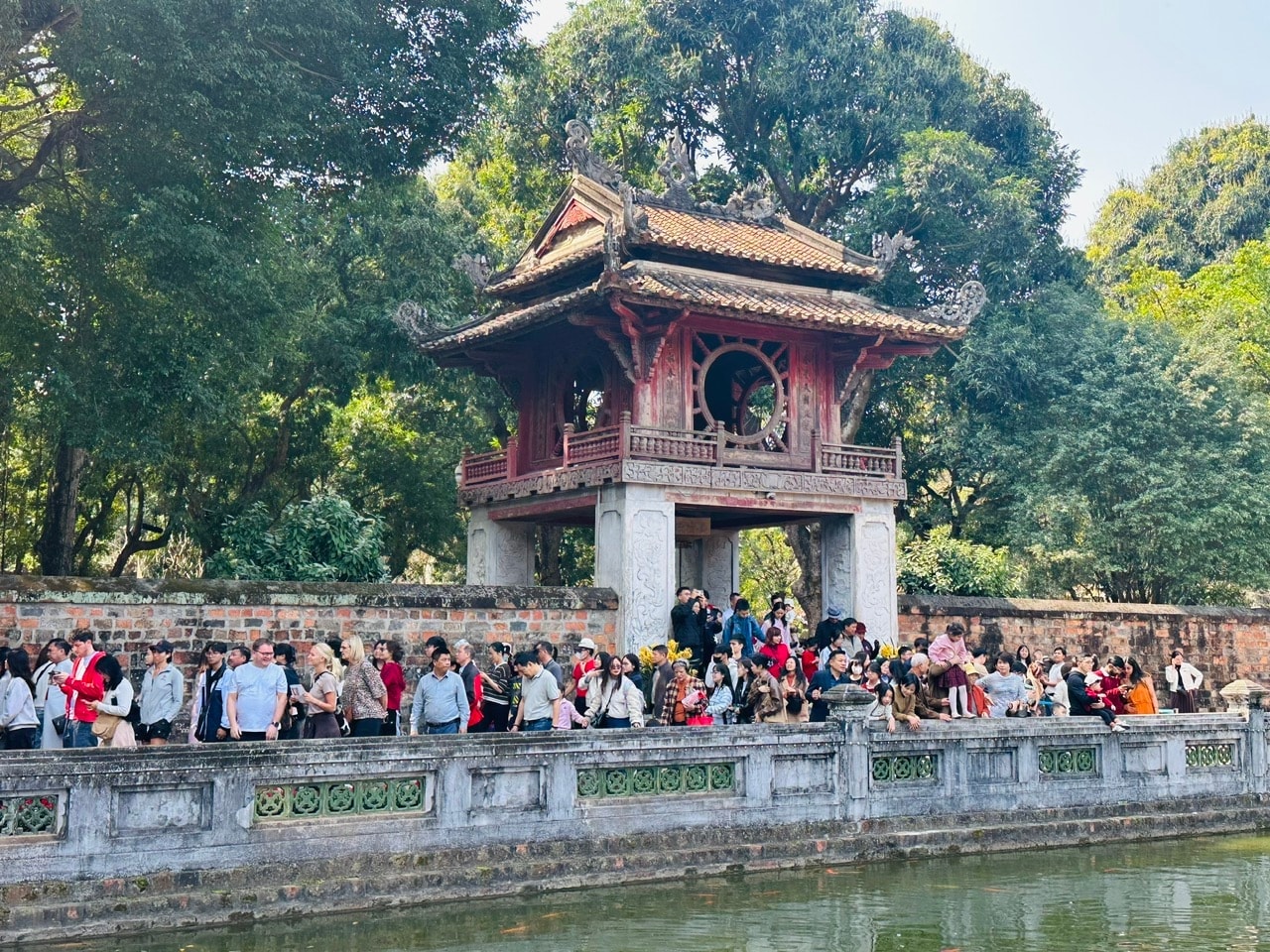
The Constellation pavilion. Photo: Hoang Quyen -
The Pavilion of the Constellation of Literature (Khuê Văn Các): This raised red wooden structure, built in 1805 under the Nguyễn dynasty, serves as the entrance gate to the third courtyard. Resting on four white stone pillars, its upper wooden level has four circular windows whose wooden spokes symbolise the radiant sun of knowledge. It is the official emblem of the city of Hanoi.
-
The Well of Heavenly Clarity (Thiên Quang Tỉnh): A large square masonry pond occupying the centre of the courtyard. Its square shape symbolises the earth, while the round windows of the Khuê Văn Các pavilion symbolise the sky, creating a cosmological harmony according to traditional geomancy.
-

Photo: Hai Yen, Yen Linh -
The Doctors’ stelae: On either side of the pond, beneath two long covered galleries, stand 82 stelae carved in dressed stone between 1484 and 1780. Each stele rests on the shell of a stone-carved tortoise (a symbol of longevity, strength and memory). The stelae bear inscriptions in Chinese characters recording the names, home villages and academic achievements of 1,304 laureates of the royal examinations. Inscribed by UNESCO on the Memory of the World register, the stelae are strictly protected: it is absolutely forbidden to cross the barriers or touch the tortoises’ heads, a gesture once popular among students but one that damages the limestone.
Fourth courtyard: the Đại Thành Điện sanctuary (The Gate of Great Success)
This is the main ceremonial and spiritual space of the temple, reached through the monumental Đại Thành Môn gate.
-
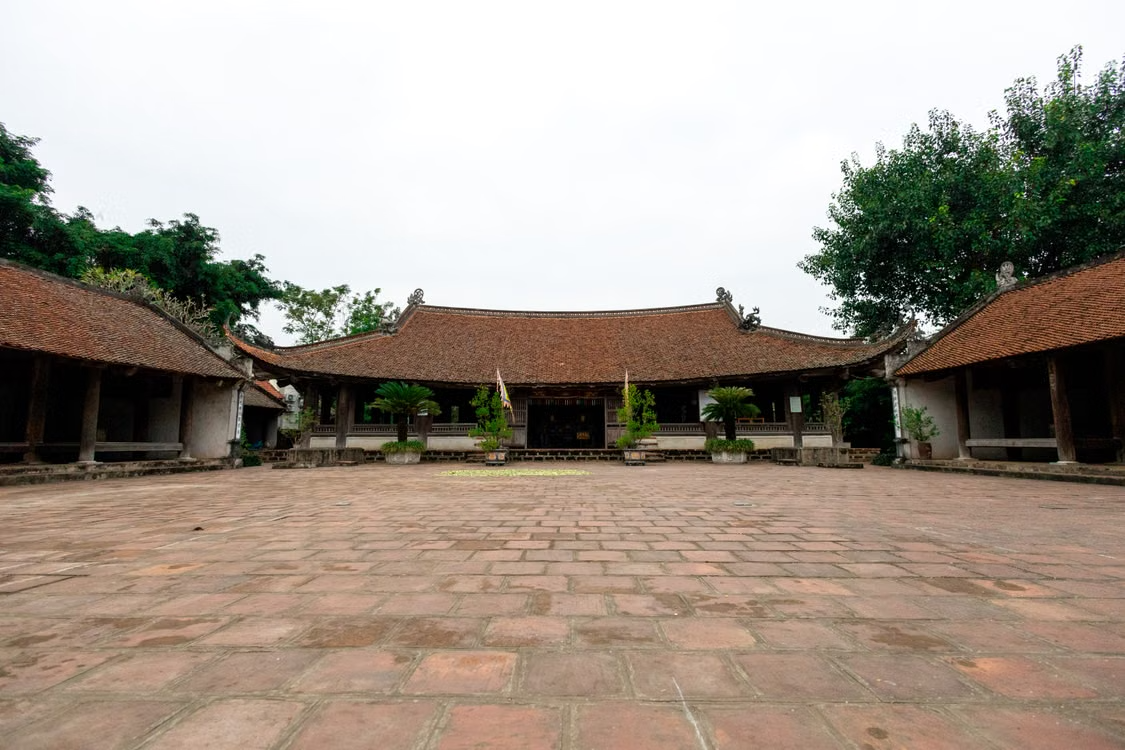
The courtyard of honour: A vast esplanade paved with red Bát Tràng bricks, designed to host gatherings of scholars and imperial rituals.
-
-
Photo: Hồng Quang
-
The Đại Bái Đường building (The House of Great Ceremonies): Located at the front of the sanctuary, this long wooden building has a massive ironwood frame, double roofs with upturned corners and ceramic dragon ornaments. This is where officials would prostrate themselves.
-
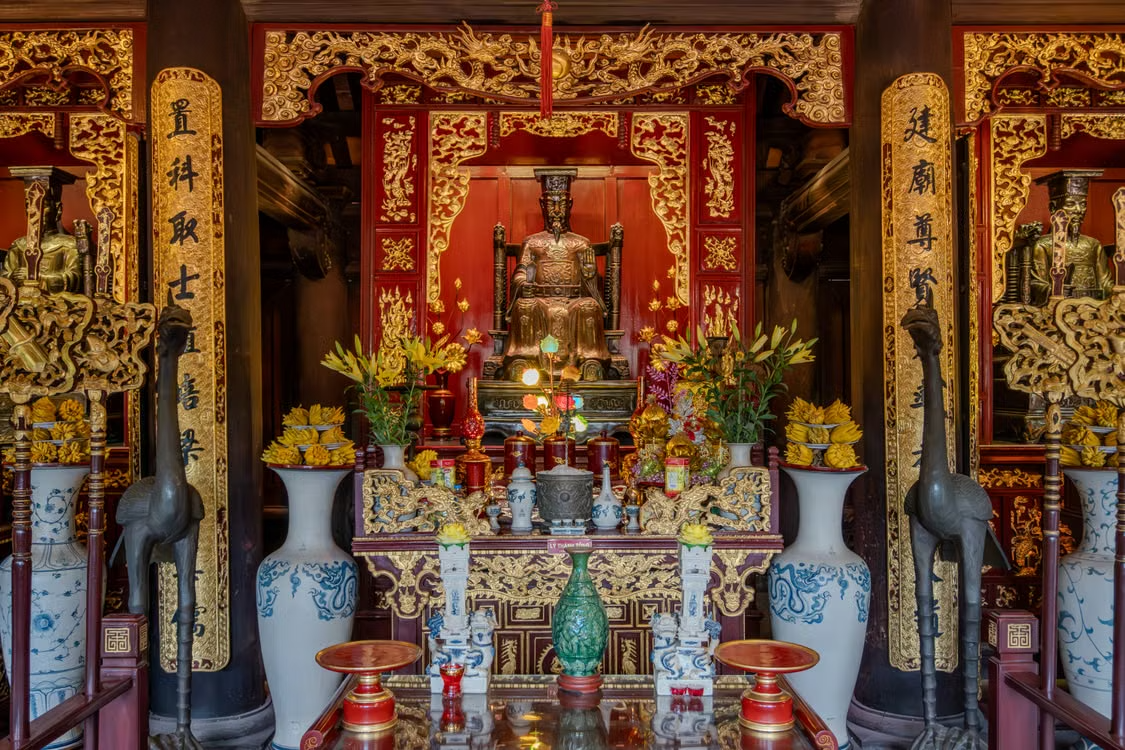
Photo: Jordan Coleman -
The main sanctuary (Đại Thành Điện): Located just behind, this space houses the sacred altars. In the centre stands the lacquered wooden statue of Confucius (Khổng Tử), flanked by statues of his four closest disciples (Tứ Phối): Nhan Hồi, Tăng Sâm, Tư Sẻ and Mạnh Tử. The atmosphere is solemn, marked by dark woodwork, gilded calligraphy panels (hoành phi) and bronze incense burners.
Fifth courtyard: the former Quốc Tử Giám university
Located at the northern end of the site, this courtyard stands on the exact site of the first imperial university, where students lodged and studied. Destroyed by bombing in 1946, the complex was entirely rebuilt in 2000, scrupulously following the architectural treatises of the Lê period.
-
The ground-floor building: Dedicated to the memory of Chu Văn An (1292 – 1370), the most famous and respected rector in the history of the Quốc Tử Giám, a symbol of moral integrity and devotion to teaching. This hall houses a permanent exhibition of archaeological objects, students’ ceremonial dress, ancient ceramic tableware and reproductions of study manuals on rice paper.
-
The upper-floor building: Dedicated to the three monarchs who contributed most to the founding, expansion and protection of the institution over the centuries: King Lý Thánh Tông (who founded the Văn Miếu in 1070), King Lý Nhân Tông (who established the Quốc Tử Giám in 1076) and King Lê Thánh Tông (who began the carving of the stone stelae in 1484).
Seasonal tips and the best times to visit
Hanoi’s climate has a direct bearing on visitor numbers and on how comfortable a visit to this largely open-air site will be.
-
Autumn (October to December): This is the ideal season in terms of climate. Temperatures between 20 and 26 degrees and the absence of heavy rain make it the best time to explore the gardens.
-
New Year and exam period (January to May): The site sees its largest local crowds. Thousands of secondary school and university students come to have wishes for success written in calligraphy on traditional paper or to pray before the altars. If you want to photograph the architecture in peace, choose a weekday visit right at opening time, 8:00 am. Weekends during this period are extremely crowded.
-
Summer (June to September): Marked by intense heat and sudden downpours in the late afternoon. It is advisable to plan your visit early in the morning and to bring an umbrella for protection from the sun in the inner courtyards, which lack shade.
Where: Hanoi
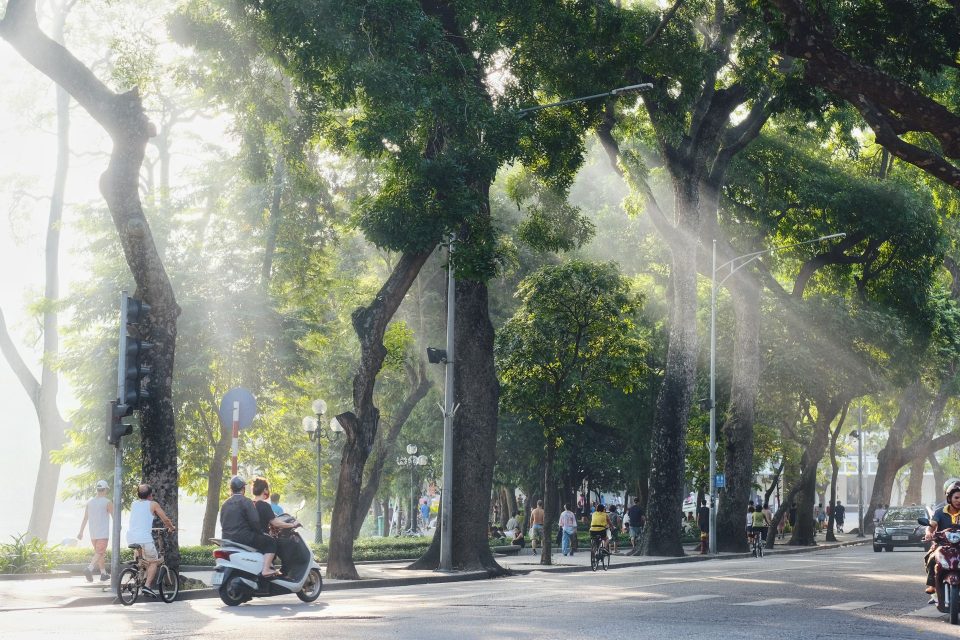
A thousand-year-old quarter on the shores of Hoan Kiem Lake
- HanoiPhường Hoàn Kiếm, Thành phố Hà Nội
- Nearest airport and stationNoi Bai International Airport (Hanoi), about 22 km · Hanoi Railway Station
- NearbyTam Dao, Ninh Binh, Mai Chau
Services in Hanoi
-
 Other tourism servicesHanoi
Phố Cổ Walks
Three hours on foot in the Old Quarter, in the morning, with a French-speaking guide. View the business profile
-
 Local agencies – DMCWhole country
Lotus d’Asie Voyages
Tailor-made trips for European travellers, with guides in all three regions. View the business profile
Itineraries passing through Hanoi
Itineraries that stop in Hanoi, focusing on a single region or crossing all three.
-
 30 days
Cruises and a long relaxing stay
A cruise in the bay and seaside resorts. View details → -
 30 days
Vietnam in retirement
A gentle itinerary, with enough rest to savour each region. View details → -
 30 days
Off the beaten track: Ha Giang, Cao Bang
Stone roads and villages where few travellers set foot. View details → -
 20 days
Honeymoon: Ha Long – Hoi An – Con Dao
A limestone bay, an old town and a peaceful island, for two. View details →
Related stories
-
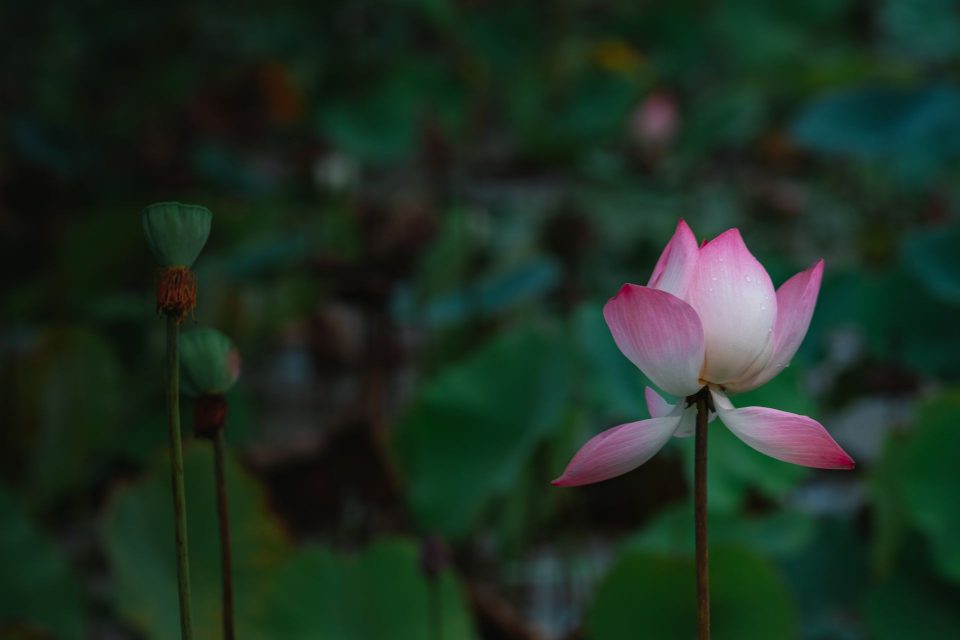 Story Hanoi
The craft of making lotus-scented tea, national intangible cultural heritage
A true symbol of the art of living in the thousand-year-old capital, the traditional making of Tây Hồ lotus-scented tea has just been officially… Read the story -
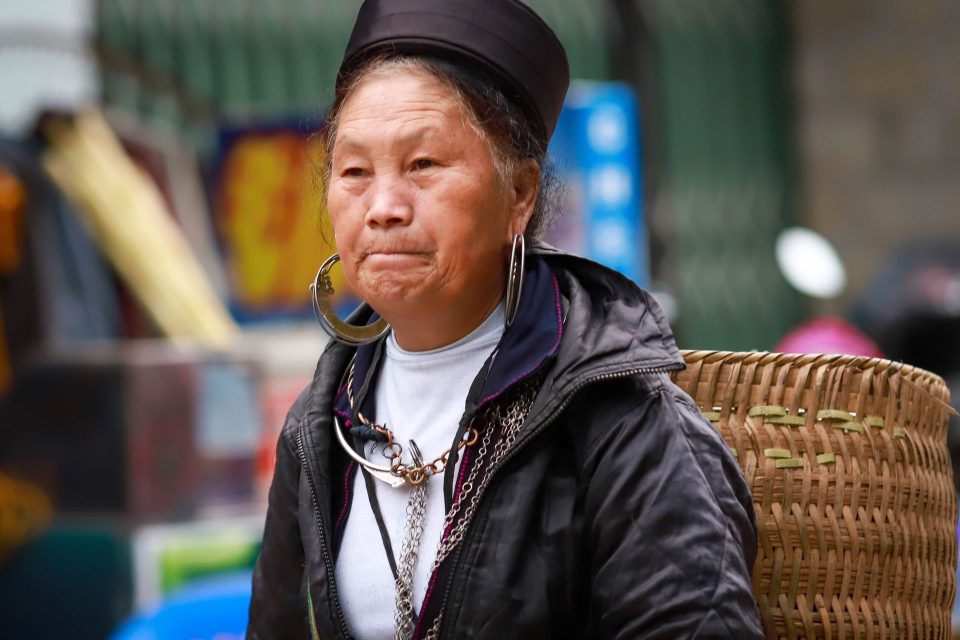 Report Ha Giang
The costumes of the Red Dao: between aesthetics, creativity and heritage
The Red Dao are part of the Dao ethnic group, one of Vietnam's 53 ethnic minorities. They live mainly in the mountainous northern provinces… Read the report -
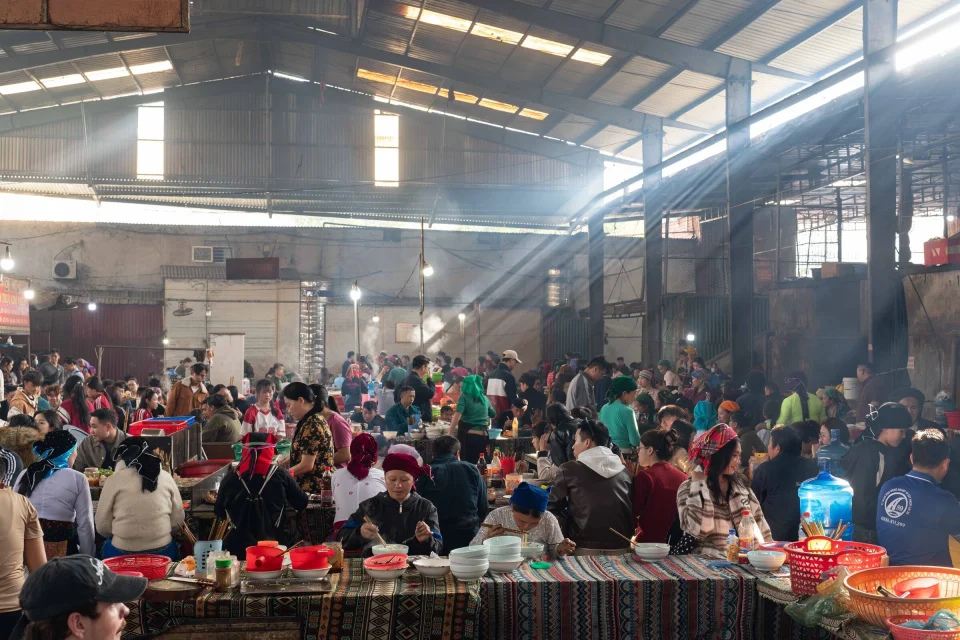 Report Ha Giang
Going to Mèo Vac to immerse yourself in the culture of the North-West
Nestled in the heart of the famous Đồng Văn limestone plateau, in Hà Giang province in the far north of Vietnam, Mèo Vạc district… Read the report
Similar experiences
-
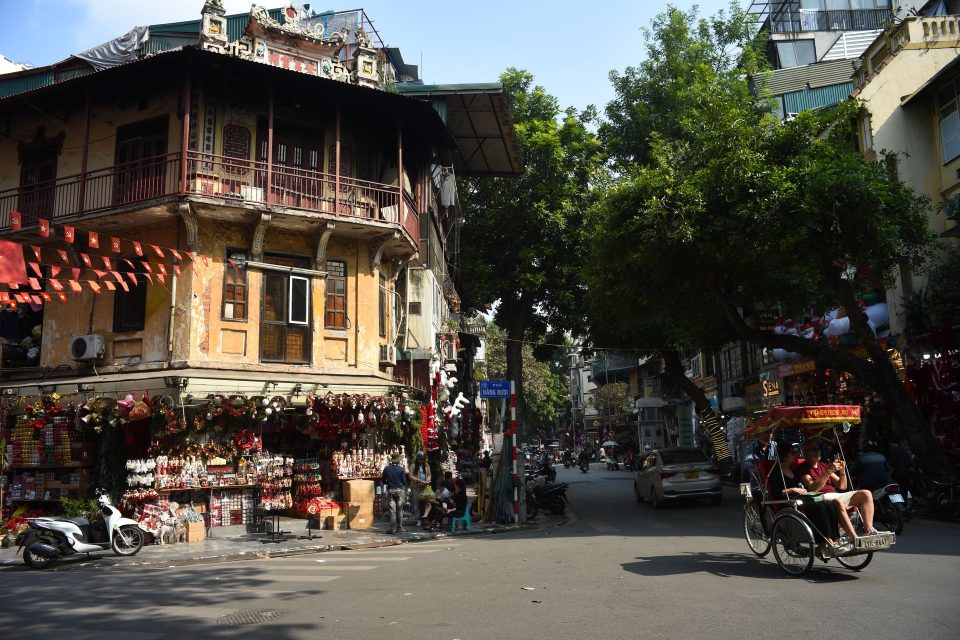 Hanoi
Why is Hanoi’s Old Quarter so unique?
Also known by its historic name of the “36 guilds quarter” (36 phố phường), Hanoi's Old Quarter is the beating economic and cultural heart… View the experience -
 Hanoi
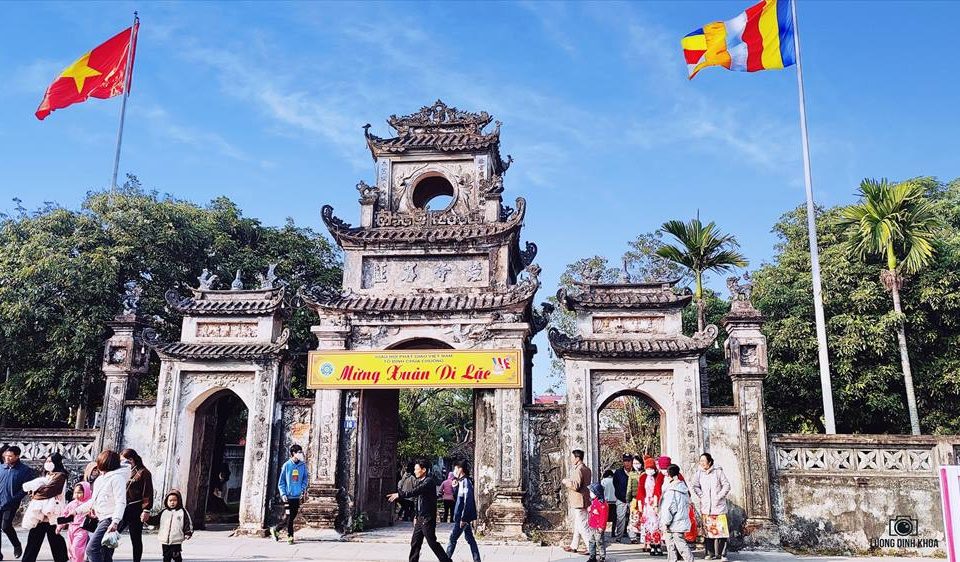
The stones of Pho Hien: when Tonkin architecture tells of centuries of international trade
Located on the left bank of the Red River, about 60 kilometres south-east of the capital Hanoi, the city of Hung Yen is home… View the experience -
 Hanoi
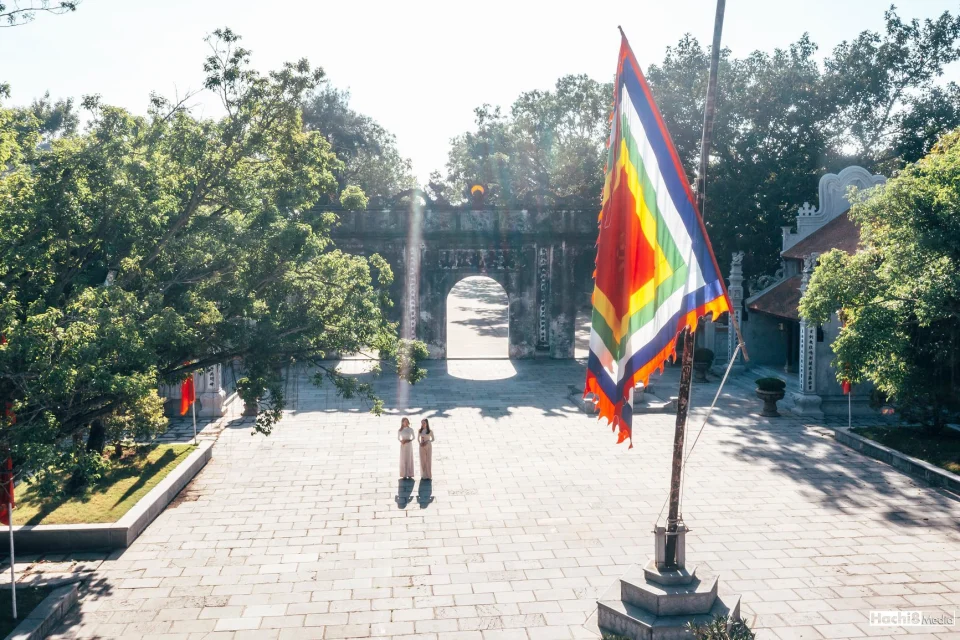
Through the gates of Con Son-Kiep Bac: a journey to the heart of Hai Duong’s historic and spiritual sanctuary
Photo: Ngo Huy Hoa Located about 80 kilometres north-east of Hanoi, in Chi Linh district, the Con Son-Kiep Bac heritage complex is one of… View the experience