


Sailing Lan Ha Bay: the wild alternative to the karst labyrinths of the Gulf of Tonkin
- Recommended months
- April – june and september – october Spring · Summer · Autumn
Why try it?
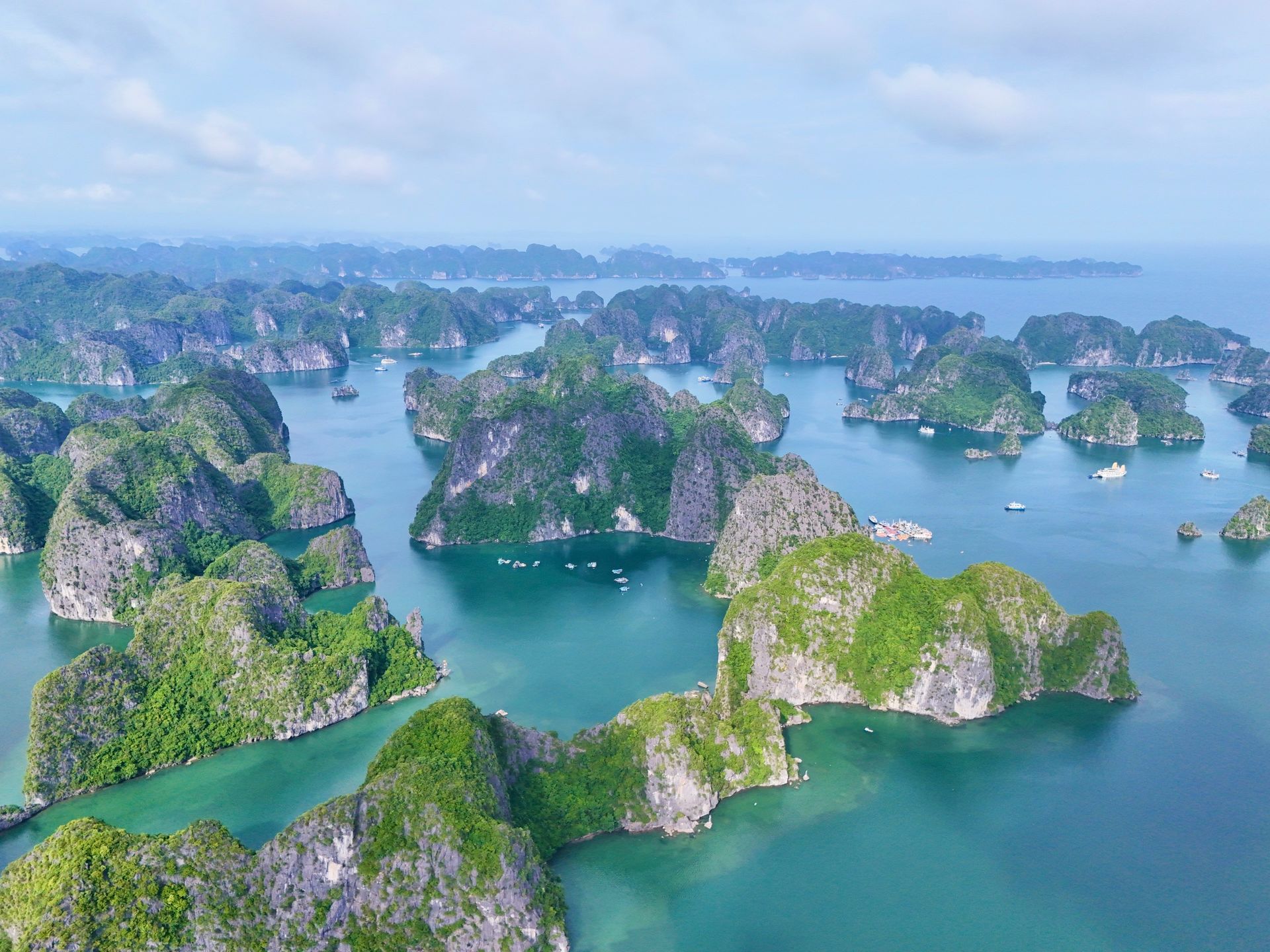
Lining the east coast of Cat Ba Island and extending the famous Ha Long Bay to the south, Lan Ha Bay covers more than 7,000 hectares of emerald waters and limestone formations. This maritime area, administered by Hai Phong province, is made up of nearly 400 rocky islets covered in dense tropical vegetation. Unlike its northern neighbour, Lan Ha has kept a wilder character, with human activity still firmly rooted in traditional fishing and aquaculture. For travellers in search of serenity, the bay offers karst landscapes that are just as magnificent, yet spared the heavy traffic of large cruise ships, making it a major and authentic stop in northern Vietnam.
Access and sailing logistics from the regional hubs
Lan Ha Bay fits easily into an itinerary from Hanoi or Hai Phong. The bay’s main gateway is Ben Beo harbour, just two kilometres from Cat Ba town centre. From Hanoi, daily transfers combine road and fast ferry to reach the island in under three hours. Once at Ben Beo harbour, travellers can board traditional wooden junks for day trips, or book a cabin on medium-sized boats for two-day cruises with a night on board. Boat services are regular, and the bay, sheltered from offshore winds by the terrain of Cat Ba, offers particularly stable sailing conditions.
Major sights and unmissable stops in the bay
To help you plan your time on the water, three major geographical sites stand out for their accessibility and visual richness.
Historical immersion in the floating village of Cai Beo

Photo: Binh Ho Image
Located just outside Ben Beo harbour, the village of Cai Beo is one of the oldest fishing settlements in Southeast Asia, with traces of human activity dating back to prehistoric times. Making your way among its hundreds of floating houses, linked by wooden pontoons and fish-farming pens, gives you a close-up view of the daily life of seafaring families. The boats glide gently between rafts where nets and crab pots are left to dry. For visitors, this crossing is a fascinating cultural transition before heading into the completely uninhabited parts of the bay.
Exploring Sang Toi cave by kayak

Photo: Capella
Sang Toi cave, also known as the Dark and Bright cave, marks the natural boundary between Lan Ha Bay and Ha Long Bay. The site can only be reached at low tide, by kayak or in small bamboo boats rowed by locals. The passage beneath this natural limestone arch, nearly 100 metres long, leads to a completely enclosed inner lagoon ringed by sheer cliffs clad in dense vegetation. The absence of waves and the silence of this natural pool let you appreciate the echo of dripping water and, with a little luck, spot langur monkeys on the rock faces.
Cat Ba National Park
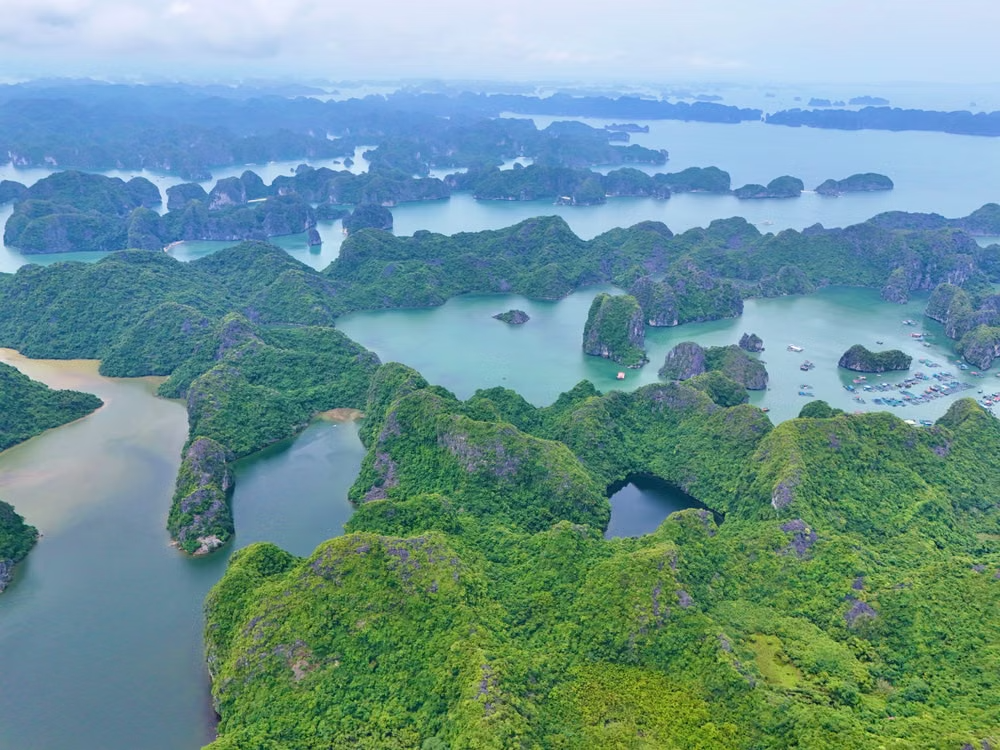
Photo: Hoang Ha
Cat Ba National Park is located in Cat Hai district. It is one of the largest special-use forests in Vietnam. Today it is home to numerous marine ecosystems, land forests and mangroves, as well as rare plant and animal species. In 2004, Cat Ba National Park was recognised by UNESCO as a World Biosphere Reserve.
Visitors can opt for a hike of 4 to 8 hours, or a shorter route of around 2 hours. Walking, cycling, motorbike or car (excursions of 2 to 3 hours) are also popular options. You can cross the Kim Giao forest, climb Mount Ngu Lam to admire the panorama over the national park, observe the nocturnal wildlife and explore caves. The hiking trail leads to the village of Viet Hai.
Climate patterns and the sailing season
The weather in Lan Ha Bay determines how clear the water is and whether sea excursions are possible. The most favourable period to plan a stay runs from March to May, with pleasant spring temperatures of around 25 degrees and clear skies ideal for photography. Autumn, from September to November, is another excellent window, with dry air and moderate visitor numbers. Summer, from June to August, brings high temperatures ideal for swimming, but this season also coincides with the national high season and an occasional risk of tropical storms. Finally, from December to February, the bay is cloaked in a mystical winter mist, wonderful for atmosphere but less suited to water activities because of the cool water.
The preserved balance of an exceptional maritime heritage
Lan Ha Bay manages to maintain a fragile but successful balance between developing quality tourism and safeguarding its ecosystems. Strict regulations on the number of boats allowed to stay overnight in the bay help to limit visual and noise pollution, guaranteeing travellers a complete escape. This marine sanctuary, where the cry of seabirds replaces the drone of engines, stands out as a first-class destination for those wishing to contemplate the geological grandeur of the Gulf of Tonkin in its purest form, and in a way that respects the local environment.
Where: Cat Ba
A wooded island in the heart of Lan Ha Bay, with floating fishing villages
- Cat BaĐặc khu Cát Hải, Thành phố Hải Phòng
- Nearest airport and stationCat Bi International Airport (Hai Phong), about 36 km · Ninh Binh Railway Station
- NearbyHa Long Bay, Hanoi, Ninh Binh


Featured in these itineraries
Itineraries that include this experience; VNCT member agencies tailor them to your wishes.