

Hon Da Bac in Ca Mau: a practical guide to the coastal sanctuary at the southern tip
- Recommended months
- December – april Spring · Winter
Why try it?

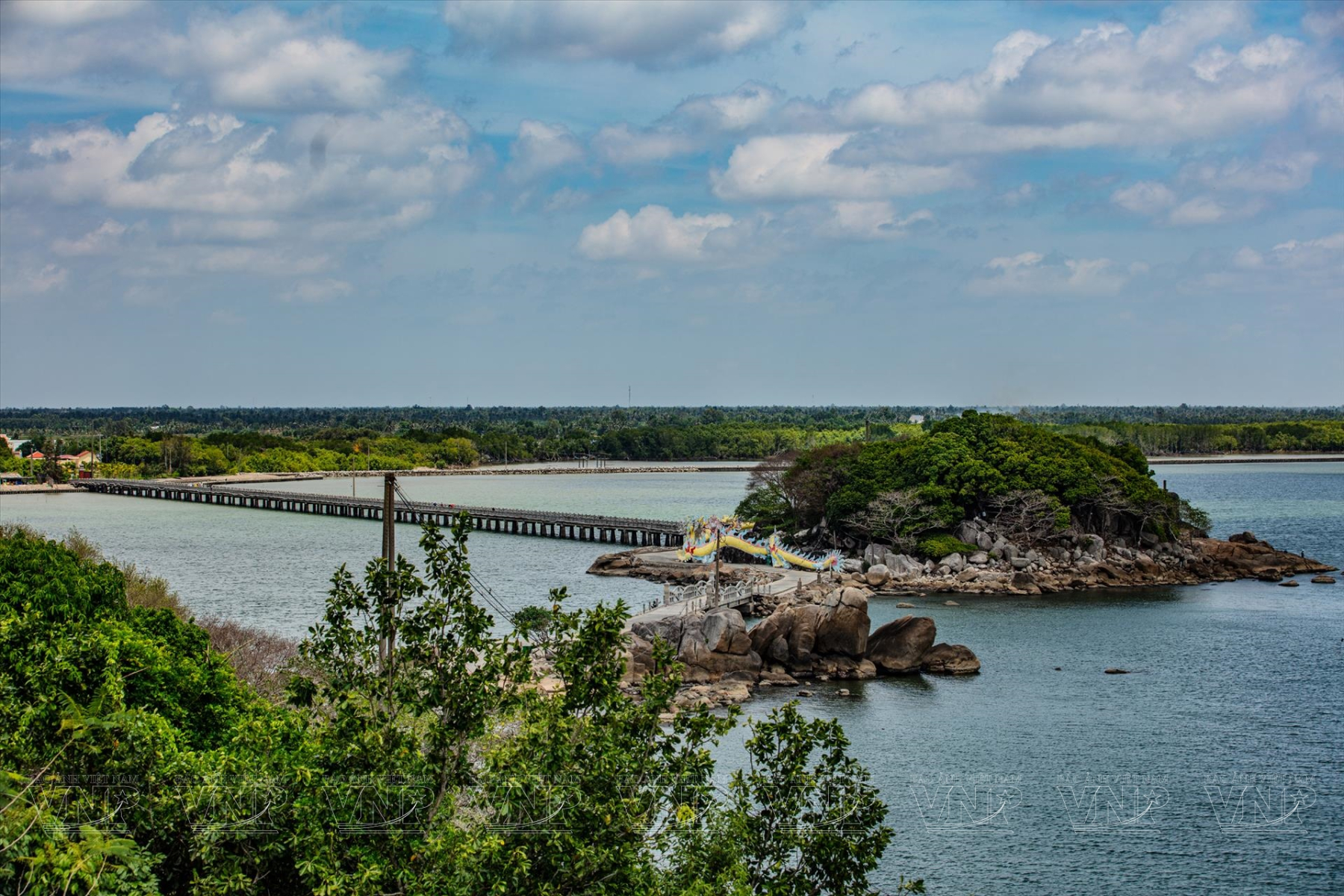
Located in Khánh Bình Tây commune, in Trần Văn Thời district, the island complex of Hòn Đá Bạc rises off the western coast of the Cà Mau peninsula. Some forty-five kilometres from the centre of Cà Mau city, this singular site consists of three distinct islets of sedimentary granite emerging from the shallow waters of the Gulf of Thailand. Linked to the shore by a long concrete footbridge spanning the sea, this area of more than four hectares combines geological formations sculpted by the surf with major religious sanctuaries and preserved maritime traditions. A half-day visit lets you combine a contemplative walk over the rocks with an understanding of the coastal culture and the rituals of the province’s fishing communities.
The activities and key features of Hòn Đá Bạc
Exploring this island site follows a continuous walking route that links unique geological curiosities with heritage buildings.
Crossing the sea bridge on foot and observing the geology
The excursion begins with a walk across a long reinforced concrete pedestrian viaduct linking the mainland to the first rocky islet, offering a 360-degree panoramic view over the coastal mudflats and the dense mangrove forests of the buffer zone. This walk of several hundred metres above the waves lets you observe the changing colours of the water and the comings and goings of local boats, while feeling the full force of the offshore wind. Once on the first islet, the route follows a network of paved paths and small walkways that wind around heaps of rounded granite boulders piled one on top of another. Local people have given these formations evocative names based on their spectacular shapes, such as the fairy well (Giếng Tiên), the giant footprints (Bàn Chân Tiên) or the stone hand, all reliefs smoothed by thousands of years of marine erosion.
Travellers make this walk right along the water’s edge, which allows them to observe at close quarters the constant erosive action of the waves, sea spray and salt on the rock, a quite exceptional geological phenomenon in this part of the Mekong Delta, which otherwise consists mainly of plains of loose alluvial sediment and mudflats. The rock strata reveal shades of grey and white that contrast sharply with the hardy shrubs that have managed to take root in the crevices of the stone. Natural viewing platforms have been preserved along the steep rock faces, offering stops ideal for studying the coastal relief and contemplating the sea horizon, where the silhouettes of large commercial fishing vessels sometimes appear.
The spiritual sanctuary of the Whale Temple
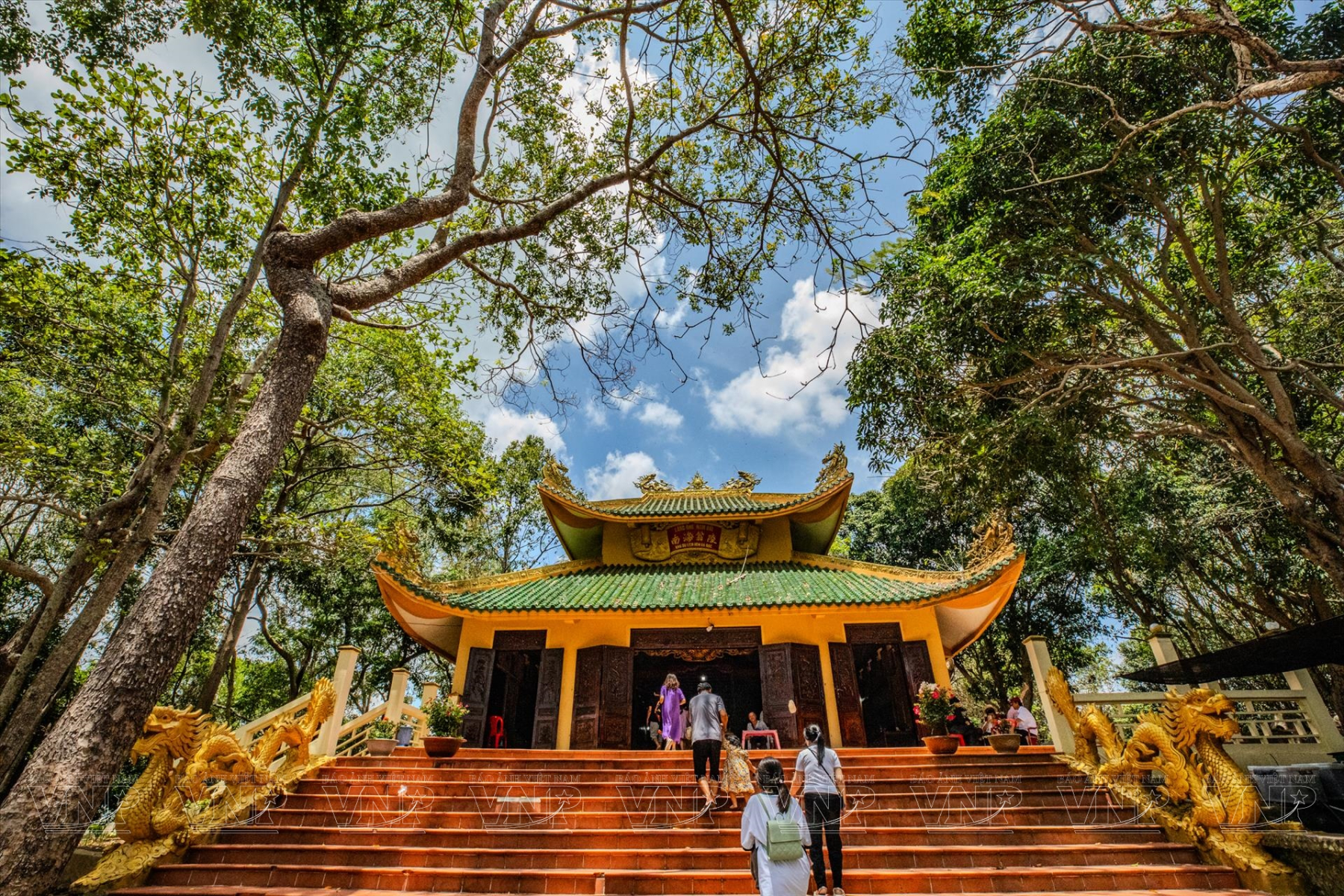
Built on the highest and most wooded point of the main islet, reached by a stone staircase shaded by centuries-old trees, the Whale Temple (Lăng Ông Nam Hải) is the spiritual and cultural heart of the complex for all the seafaring communities of Cà Mau province. This traditionally designed building, recognisable by its curved roofs and colourful dragon motifs, houses the preserved skeleton of a very large cetacean that was stranded on the coast several decades ago, a relic venerated by sailors under the honorific title of protective deity of the seas, or Nam Hải Tướng Quân. Visitors come to see at close range this impressive line of bones, laid out in the centre of the main hall, and to understand the foundations of this ancestral maritime cult, which still governs departures to sea, the safety of crews in the face of storms and the rituals for blessing the nets.
 The skeleton of the giant whale is preserved and respectfully venerated inside the Nam Hai whale mausoleum.
Immersing yourself in this place of devotion lets you feel its solemn atmosphere, especially on full-moon days or during the annual Nghinh Ông festival, when hundreds of boats decked with flags converge on the islet in a spectacular frenzy of activity. The interior of the sanctuary is filled with the scent of incense and adorned with lacquered panels bearing ancient characters, offering a space of absolute silence in sharp contrast with the constant crash of the surf against the granite cliffs below. By chatting with the temple keepers, travellers discover local tales and legends of whales that came to guide fishermen lost in the mist, bearing witness to the unbreakable bond between the local population and the marine ecosystem of the Gulf of Thailand.
Watching local fishing and the gathering of rock oysters
The rocky fringes and jagged reefs surrounding the base of the three islets are an ideal place to observe the traditional subsistence activities of the coastal inhabitants. At low tide, when the water recedes to reveal the bare rock, visitors can watch local gatherers, equipped with special iron tools, nimbly making their way across the slippery reefs to prise off the rock oysters (hàu đá) firmly attached to the granite, as well as small rock crabs. Meanwhile, anglers settle patiently on the stone outcrops that reach furthest into the waves to catch coastal fish. Several small, basic stalls set up near the jetty and the bridge allow you to eat this perfectly fresh seafood, simply grilled over charcoal, offering a direct immersion in the food culture and daily life of the people of the Cà Mau coast.
Seasonality and sea conditions for the visit
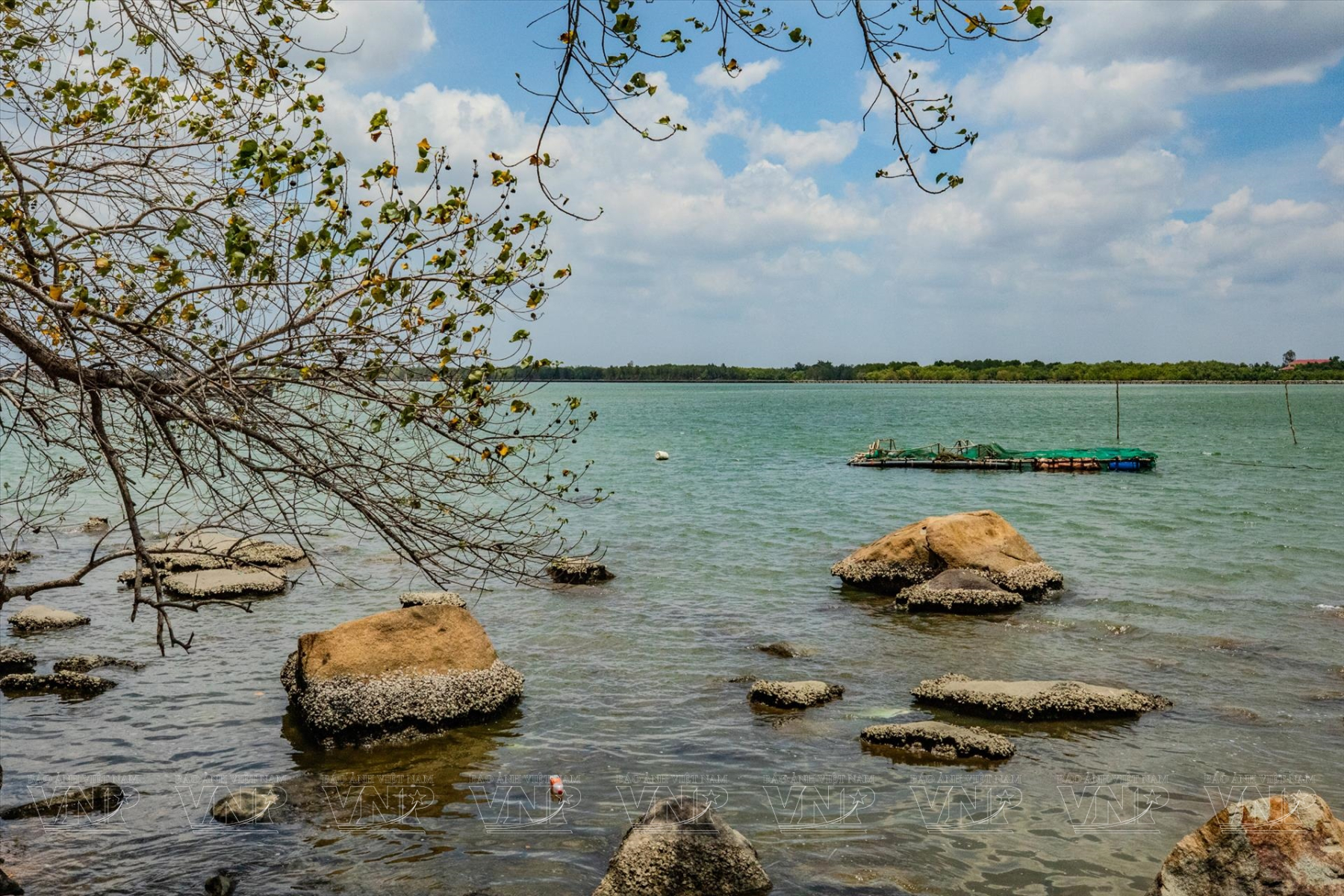
The pristine beauty of Hon Da Bac
Access to Hòn Đá Bạc and the quality of what you can see there depend on the calendar of the monsoons that govern the climate of the southern coastal tip. The most favourable period to plan this itinerary is from December to April, during the dry season, when the north-easterly sea winds are steady, the sky remains clear and the water of the gulf offers optimal clarity for observing the rocky seabed. Average temperatures range between 28°C and 34°C, making walking on the bridge and the rocks entirely feasible, preferably early in the morning around 8 a.m. or after 3.30 p.m. to avoid direct sun exposure and enjoy the soft light. The rainy season, from May to November, brings daily downpours and the risk of westerly storms, which make crossing the footbridge uncomfortable because of the high waves and gusts of wind that sweep across the structure.
Preserving a link in the coastal heritage
Hòn Đá Bạc represents a delicate balance between the development of leisure infrastructure and the conservation of a unique rocky island ecosystem in the midst of the Cà Mau mangroves. The construction of the concrete viaduct has opened up the islets, making access easier for flows of travellers without the need for complicated motorboat shuttle connections. By taking care to respect the tranquillity of the sacred spaces of the Whale Temple and refraining from leaving any plastic waste on the granite formations, visitors contribute directly to keeping this coastline clean, ensuring the future of a major historical and geological site of the peninsula.
Photo: Nguyễn Luân
Where: Ca Mau
The country's southern tip, the mangroves and Hon Da Bac island
- Ca MauPhường Tân Thành, Tỉnh Cà Mau
- Nearest airport and stationCa Mau Airport, about 3 km · Saigon Railway Station
- NearbyCan Tho, Chau Doc, Con Dao

Similar experiences
-
 Hoi An
Make a lantern with a Hoi An craftsman
Bend the bamboo frame, stretch the silk and leave with a lantern made with your own hands, in a small workshop in the heart of the old town. View the experience -
 Hue
Thuy Xuân, a jewel of incense craftsmanship
Nestled just 7 kilometres south-west of the centre of the imperial city of Huế, the village of Thủy Xuân stands as the guardian of… View the experience